
Depression is one of the most common mental health challenges worldwide, affecting more than 280 million people according to the World Health Organization. While medications and psychotherapy are effective for many, a significant number of people continue to struggle with treatment-resistant depression (TRD).
This is where T-PEMF (Transcranial Pulsed Electromagnetic Field therapy) is attracting attention as a non-invasive, drug-free, and safe option that may improve mood by stimulating brain function.
In this article, we’ll explore:
- What is T-PEMF?
- How does T-PEMF work?
- Scientific evidence for T-PEMF in depression
- Benefits of T-PEMF
- How does T-PEMF compare to other brain therapies?
- Is T-PEMF safe?
- The future of T-PEMF therapy
What is T-PEMF?
T-PEMF stands for Transcranial Pulsed Electromagnetic Field therapy.
It’s a specialized form of PEMF (Pulsed Electromagnetic Field) therapy designed specifically for the brain and central nervous system.
Unlike general PEMF mats or devices (which target pain, circulation, and physical healing), T-PEMF delivers low-intensity electromagnetic pulses directly to the scalp and underlying brain tissue.
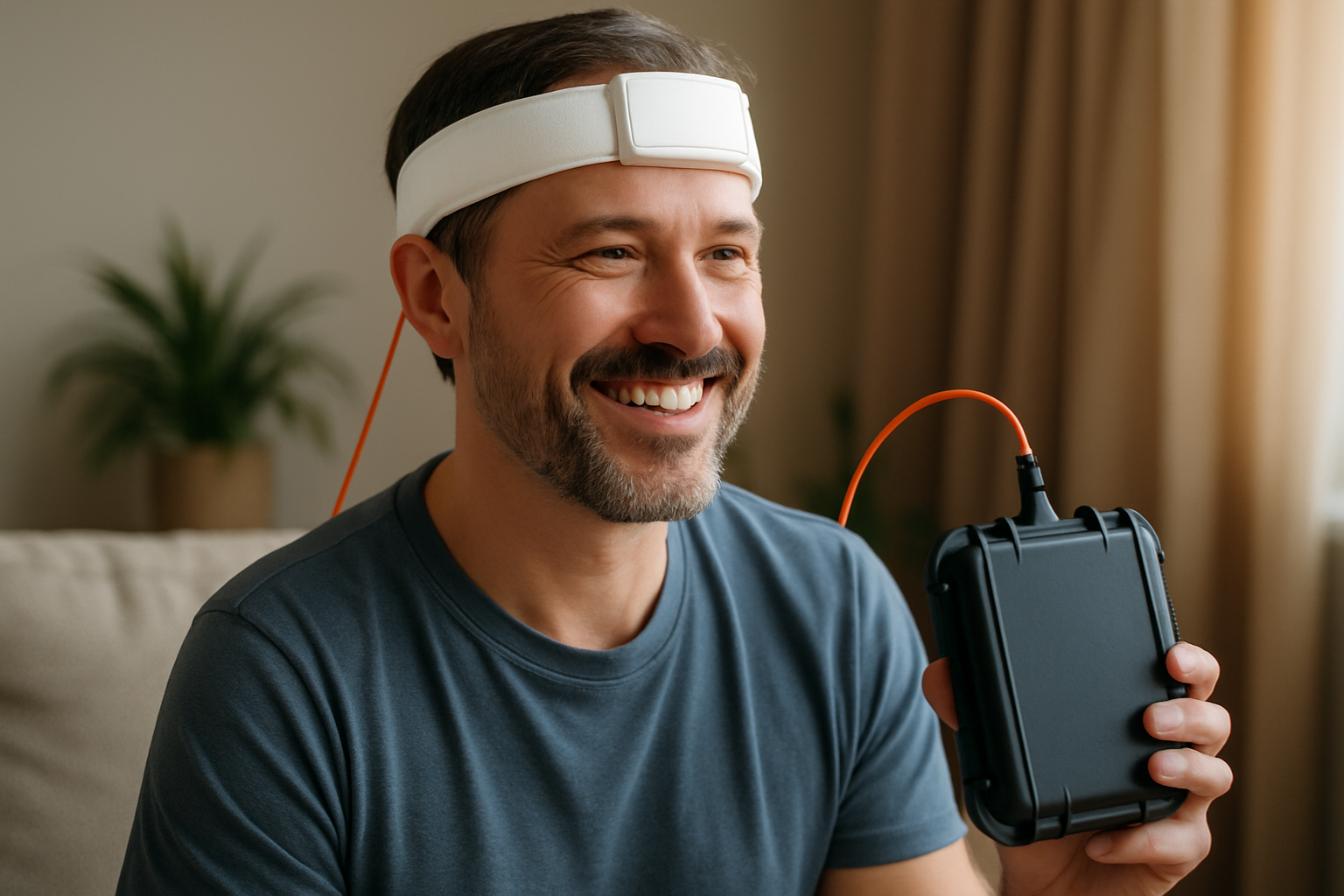
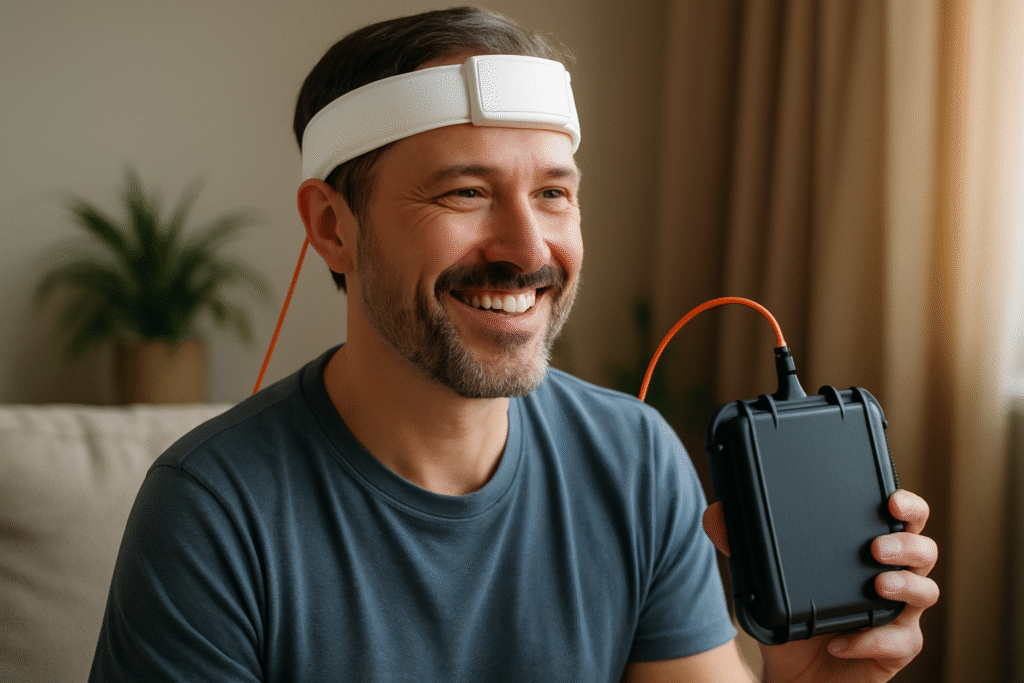
The device typically looks like a headset or cap fitted with multiple coils that generate pulsed fields. These fields gently penetrate the skull, stimulating brain cells in regions associated with mood regulation, cognition, and energy balance.
How Does T-PEMF Work?
The brain operates through electrochemical signals. In depression, these signals often become imbalanced — especially in circuits involving the prefrontal cortex and limbic system.
T-PEMF delivers weak electromagnetic pulses (typically 50 Hz, ~1–2 mT / 10–20 Gauss) to help restore balance.
Mechanisms of Action:
- Neuroplasticity Boost – T-PEMF promotes the brain’s ability to rewire itself, improving resilience against depressive states.
- Cellular Energy Enhancement – The pulses stimulate mitochondria in brain cells, increasing ATP (energy molecule) production.
- Improved Blood Flow – T-PEMF enhances microcirculation in brain tissue, ensuring better oxygen and nutrient delivery.
- Neurotransmitter Regulation – Studies suggest it may increase activity in dopamine and serotonin pathways, crucial for mood.
Together, these effects create an environment that supports better mood, focus, and cognitive flexibility.
Scientific Evidence for T-PEMF in Depression
Several clinical studies have tested T-PEMF specifically in patients with major depressive disorder and treatment-resistant depression.
Key Studies
- Martiny et al. (2010) – Randomized Double-Blind Study
- Patients with treatment-resistant depression received daily 30-min T-PEMF sessions (50 Hz, ~1–2 mT) for 5 weeks.
- Results: Significant improvement in depression scores (Hamilton Depression Rating Scale).
- Remission rates were comparable to antidepressant medications.
- Study link – PubMed
- Martiny et al. (2018) – Long-Term Study
- Evaluated the effects of 8 weeks of T-PEMF in TRD patients.
- Findings: Sustained improvement in mood, sleep, and energy levels.
- Importantly, T-PEMF was well tolerated with minimal side effects.
- Study link – PubMed
- Rasmussen et al. (2009)
- T-PEMF significantly improved mood and cognitive performance in depressed patients after several weeks of treatment.
- Demonstrated neurobiological effects on cortical excitability and plasticity.
- Study link – PubMed
📌 Summary: Multiple peer-reviewed studies show that T-PEMF can reduce symptoms, improve remission rates, and support long-term recovery in patients with major depressive disorder.
Benefits of T-PEMF
- ✅ Drug-free: Ideal for patients who cannot tolerate antidepressants.
- ✅ Non-invasive: No surgery or anesthesia required.
- ✅ Daily use at home: Many T-PEMF devices are designed for home use under prescription.
- ✅ Few side effects: Most patients report only mild scalp sensations or warmth.
- ✅ Effective for TRD: Shows promise where medications and talk therapy fail.
How Does T-PEMF Compare to Other Brain Therapies?
There are several forms of brain stimulation used in depression, including:
- rTMS (Repetitive Transcranial Magnetic Stimulation)
- Uses strong magnetic pulses (1–2 Tesla).
- Requires clinic visits.
- FDA-approved and effective, but more expensive.
- ECT (Electroconvulsive Therapy)
- Highly effective for severe depression.
- Requires anesthesia.
- Can cause memory side effects.
- T-PEMF
- Uses much weaker fields (~10–20 Gauss).
- Safe for daily use.
- Home-based option.
- Affordable compared to rTMS and ECT.
👉 In short, T-PEMF fills the gap between traditional PEMF devices and high-intensity brain stimulation therapies.
Is T-PEMF Safe?
Clinical studies consistently show that T-PEMF is safe and well tolerated.
Side effects reported:
- Mild scalp tingling
- Temporary warmth under electrodes
- Occasional mild fatigue
Who should avoid T-PEMF?
- People with implanted electronic devices (pacemakers, cochlear implants)
- Pregnant women (safety not established)
- Individuals with uncontrolled epilepsy
For most others, T-PEMF provides a low-risk, non-drug alternative to manage depression.
The Future of T-PEMF Therapy
T-PEMF is still a relatively new field, but the research is growing. Its combination of safety, convenience, and efficacy makes it an exciting tool in the battle against depression.
Future research may expand its use to other brain conditions such as:
- Anxiety disorders
- Cognitive decline / dementia
- Parkinson’s disease
- Chronic fatigue
Conclusion
So, what is T-PEMF?
It is a transcranial pulsed electromagnetic field therapy — a non-invasive, low-intensity brain stimulation technique that has shown significant promise in treating depression, especially in treatment-resistant cases.
Scientific studies confirm that daily 30-minute T-PEMF sessions at 50 Hz (~10–20 Gauss) can improve mood, increase energy, and help patients achieve remission where other treatments have failed.
👉 If you or someone you know struggles with depression, T-PEMF offers a safe, non-drug, at-home solution worth discussing with your healthcare provider.