Explore cymatic therapy for pain management—how vibration may support relaxation, tension release, and nervous-system calm. Plus evidence links and practical tips.
Cymatic Therapy for Pain Management: A Gentle, Evidence-Informed Guide to Sound, Vibration, and Relief
Pain is personal. Some days it’s a dull ache in the background. Other days it can feel like your body is asking for a full reset—physically, emotionally, and energetically.
That’s why so many people are exploring cymatic therapy for pain management: a gentle, non-invasive wellness approach that uses sound, vibration, and frequency to support the body’s natural relaxation response. Rather than “fighting” the body, cymatic therapy aims to invite coherence—helping the nervous system soften, the tissues unwind, and the mind settle.
In this article, we’ll look at:
- what cymatic therapy is (in plain English)
- why vibration can feel so soothing during discomfort
- what the research on vibroacoustic/sound-based vibration suggests (and its limits)
- how cymatic therapy is often used alongside PEMF and other wellness tools
- practical tips to try it safely and comfortably
This is educational content, not medical advice. If pain is severe, sudden, or worsening—or if you have medical implants or a complex health condition—please check with a qualified clinician.
What is cymatic therapy?
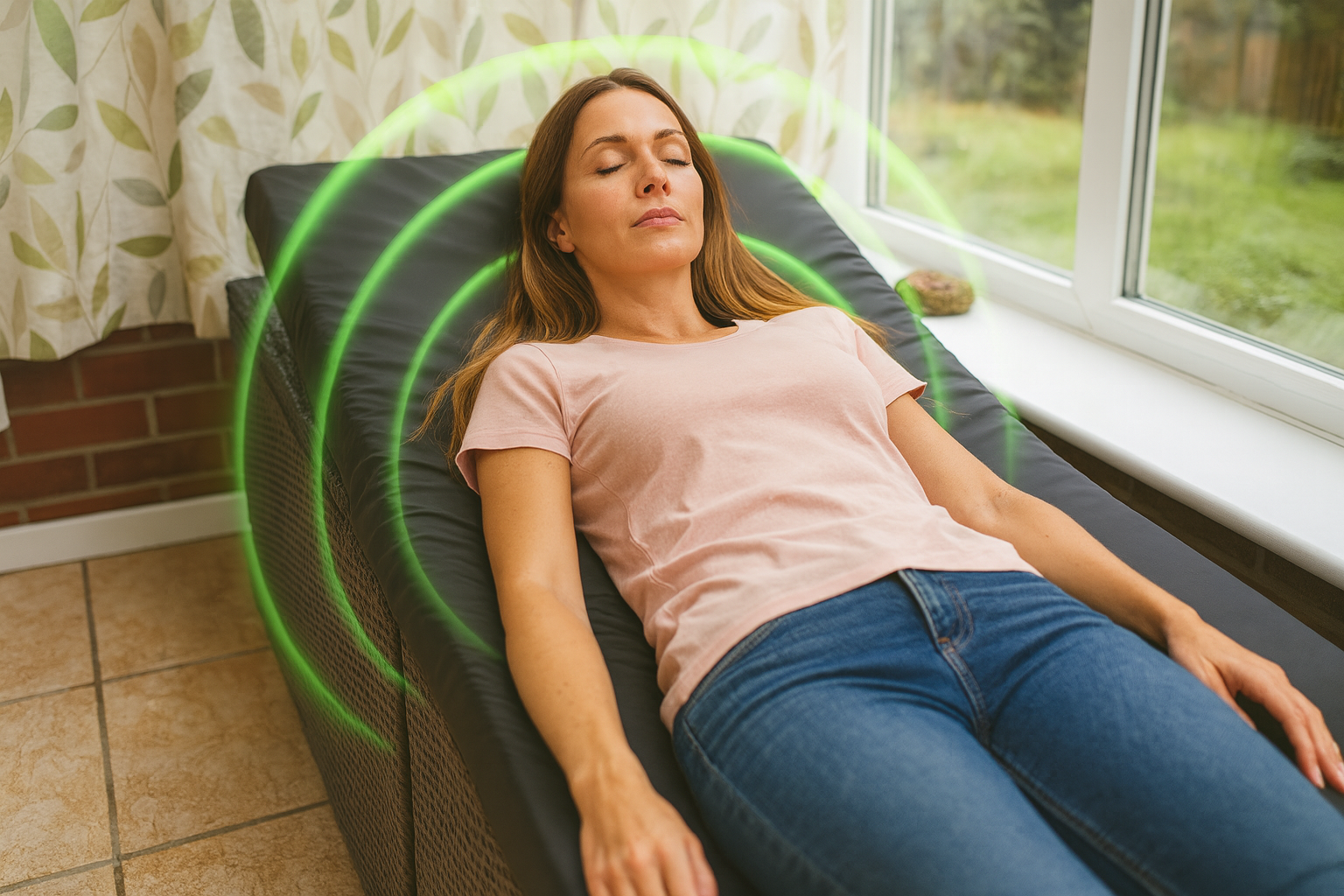
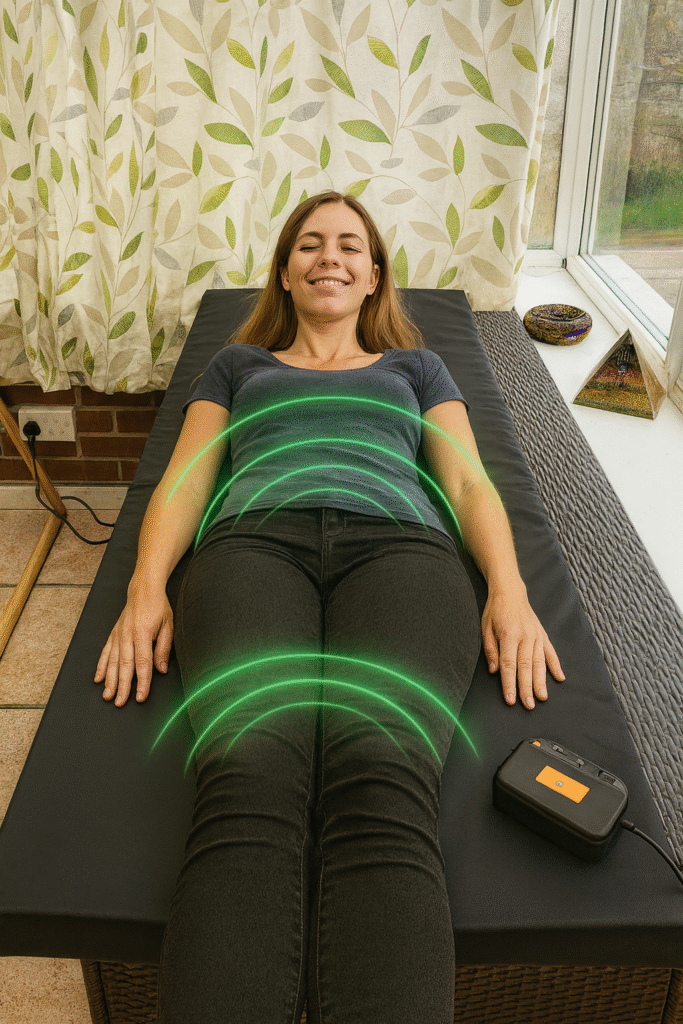
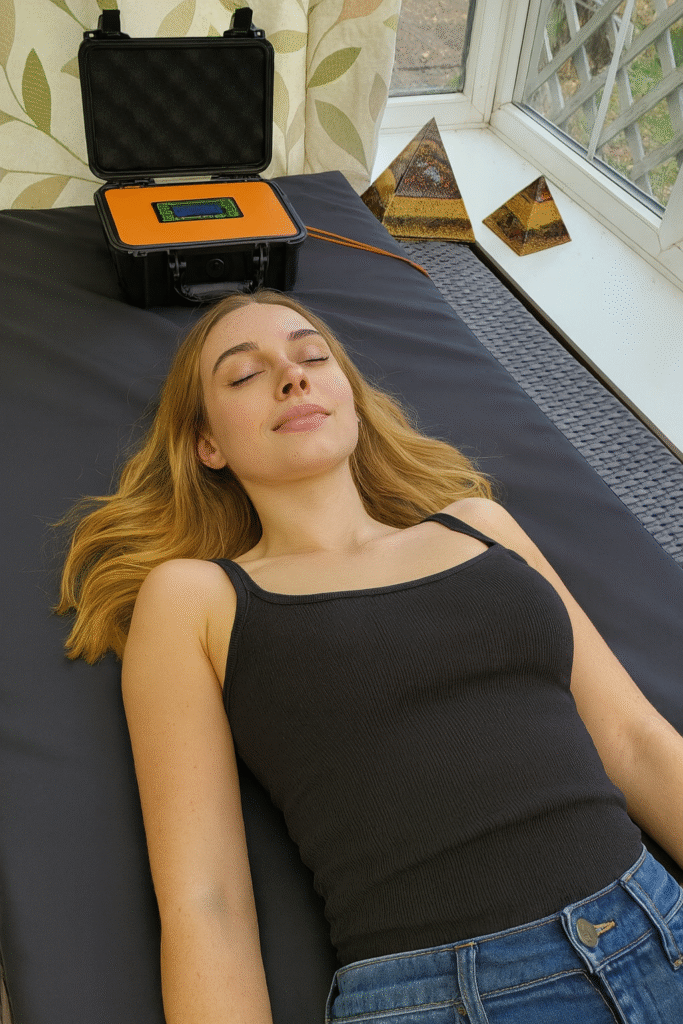
Cymatics is the study of how sound can create visible geometric patterns in matter (like sand or water). Cymatic therapy takes that principle and applies it as a felt experience: frequencies are delivered through transducers or vibrating surfaces, so you don’t just hear the sound—you feel it.
Instead of focusing on diagnosis and disease, cymatic therapy is generally used in wellness settings to support:
- relaxation and stress reduction
- body awareness and breath connection
- nervous-system regulation
- a sense of energetic balance and “reset”
Many people describe the experience as a gentle internal massage—especially when low frequencies are used.
Why vibration may help pain feel more manageable
Pain is not only a tissue event—it’s also a nervous-system event. Stress, poor sleep, tension, and emotional load can amplify pain sensitivity. When the body shifts into a calmer state (often called “rest-and-digest”), pain can feel less intense and easier to carry.
Vibration and rhythmic sound-based stimulation may help by supporting:
1) Relaxation response and stress downshift
Soothing vibration can help the body “let go,” which matters because muscle tension and stress commonly travel with pain. Research on vibroacoustic therapy in pain populations often frames outcomes around relaxation, mood, and perceived pain intensity. BMJ Open+1
2) Somatic soothing (the body feels safe enough to soften)
When the body receives a steady, non-threatening rhythm, it can become easier to relax tight areas. People often report warmth, tingling, and a sense of release—especially in muscles, fascia, and around joints.
3) Attention shift and nervous-system “re-patterning”
Gentle vibration gives the brain something else to track besides pain. That doesn’t mean pain is “in your head.” It means your brain is part of the pain experience—and rhythm can sometimes help it dial down threat signals.
What does the evidence say about cymatic therapy for pain management?
When people say “cymatic therapy,” the closest research category is often vibroacoustic therapy (VAT) or low-frequency sound stimulation—sound delivered in a way that can be felt through the body.
Here’s a balanced view:
A useful overview: scoping review (2022)
A BMJ Open scoping review looked at vibroacoustic therapy in adults experiencing pain and mapped how it’s been used, what outcomes were measured, and what the evidence suggests so far. The authors highlight promise, but also note variability in methods and the need for stronger trials. BMJ Open+1
Fibromyalgia and rhythmic vibroacoustic stimulation
A randomized controlled trial in PLOS ONE (2019) examined rhythmic vibroacoustic stimulation in fibromyalgia and reported preliminary improvements in symptoms. Fibromyalgia is complex, but it’s a common reason people explore frequency-based wellness tools. PLOS
Low-frequency sound stimulation in fibromyalgia (2015)
Another study explored low-frequency sound stimulation in fibromyalgia patients and reported outcomes suggesting potential benefit (again: not definitive, and not for everyone). PMC
Chronic back pain pilot (indirect vibroacoustic)
A pilot study investigating low-frequency sound wave stimulation applied through hands and feet reported improvements in pain and function over time. Pilot studies are encouraging but not the final word. Europe PMC
Key takeaway: The research base is real, but it’s not “settled science.” Cymatic/vibroacoustic approaches may help some people feel calmer and reduce perceived pain intensity—especially when used consistently as part of a broader routine (sleep, stress reduction, movement, hydration, support). BMJ Open+1
Cymatic therapy vs. “sound healing”: what’s the difference?
A sound bath is mainly an auditory experience. Cymatic/vibroacoustic therapy is tactile—the body physically receives vibration.
For pain management, that tactile element matters because the goal is often to help the body:
- unwind tension
- improve comfort
- settle the nervous system
- feel “held” by a steady rhythm
Why people combine cymatic therapy with PEMF for pain routines
Many people exploring pain management want something that supports both:
- physical comfort (body layer)
- regulation + calm (nervous system layer)
- energy + coherence (subtle layer)
That’s one reason combined devices are gaining attention: PEMF (pulsed electromagnetic fields) is often used in wellness routines for comfort, recovery, and relaxation—while cymatic vibration supports resonance and soothing rhythm.
On your site, you already explain PEMF fundamentals and device options clearly—so readers can learn the basics before they explore advanced combinations. Pyramid Power Products+1
A practical cymatic therapy routine for pain management
If you want this article to rank well, Google also likes actionable guidance. Here’s a gentle framework people often use:
Step 1: Start low and short
Begin with 5–10 minutes. Keep intensity comfortable. You’re looking for “soothing,” not “strong.”
Step 2: Pair with breath
Slow breathing (longer exhales) tells the nervous system: you’re safe. This alone can change how pain is perceived.
Step 3: Choose a consistent time window
A daily routine (even short) often beats occasional long sessions.
Step 4: Track responses, not perfection
After each session, note:
- pain intensity (0–10)
- tension level
- mood
- sleep quality
This helps you find what works for your body.
Step 5: Combine with supportive basics
Cymatic therapy works best when your system is supported: hydration, gentle mobility, warmth, sleep routine, and stress reduction.
Water structuring and “frequency-infused” hydration
Cymatics famously shows that sound creates patterning in water. This leads many wellness users to explore exposing water to vibration/frequency as part of their ritual—especially before meditation or rest.
It’s important to present this as what it is: an energetic wellness practice. Many people enjoy it and feel it supports hydration rituals and intention work, but it’s not a substitute for medical treatment.
Safety notes
Cymatic therapy is generally considered gentle, but always use common sense:
- If you have a pacemaker, implanted device, are pregnant, or have epilepsy/serious neurological conditions: seek medical guidance first.
- Stop if you feel dizziness, agitation, pain flare, or discomfort.
- Avoid using any device directly over acute injuries unless guided professionally.
FAQ: Cymatic therapy for pain management
Can cymatic therapy cure pain?
No. It’s best thought of as a supportive wellness tool that may help the body relax and may reduce perceived pain intensity for some people. BMJ Open+1
How quickly does it work?
Some people feel calmer immediately. Others notice benefits after consistent use over weeks. Research varies by condition and protocol. BMJ Open+1
What frequencies are best?
There isn’t one perfect frequency for everyone. Many vibroacoustic approaches use low frequencies; comfort and consistency matter more than chasing a magic number. Europe PMC+1
Is cymatic therapy the same as vibroacoustic therapy?
They overlap. Vibroacoustic therapy is a commonly used research term for low-frequency vibration delivered to the body. Cymatic therapy is often used in wellness communities, drawing inspiration from cymatic patterning principles. BMJ Open+1
Conclusion: a gentle, modern approach to pain support
If you’re searching for “cymatic therapy for pain management,” you’re probably looking for something that feels supportive—something that doesn’t overwhelm your body, and doesn’t ask you to “push through.”
Cymatic therapy offers a different doorway: rhythm, resonance, and nervous-system calm. The research around vibroacoustic approaches suggests potential for improving comfort and quality of life for some people, while also making it clear we still need more high-quality trials. BMJ Open+1
If you’re building a personal pain-support routine, cymatic therapy may be a valuable tool alongside rest, stress regulation, gentle movement, and (where appropriate) PEMF-based wellness practices.